
How to Read SDR and PN Values for PE100 Pipes?
Quick Summary
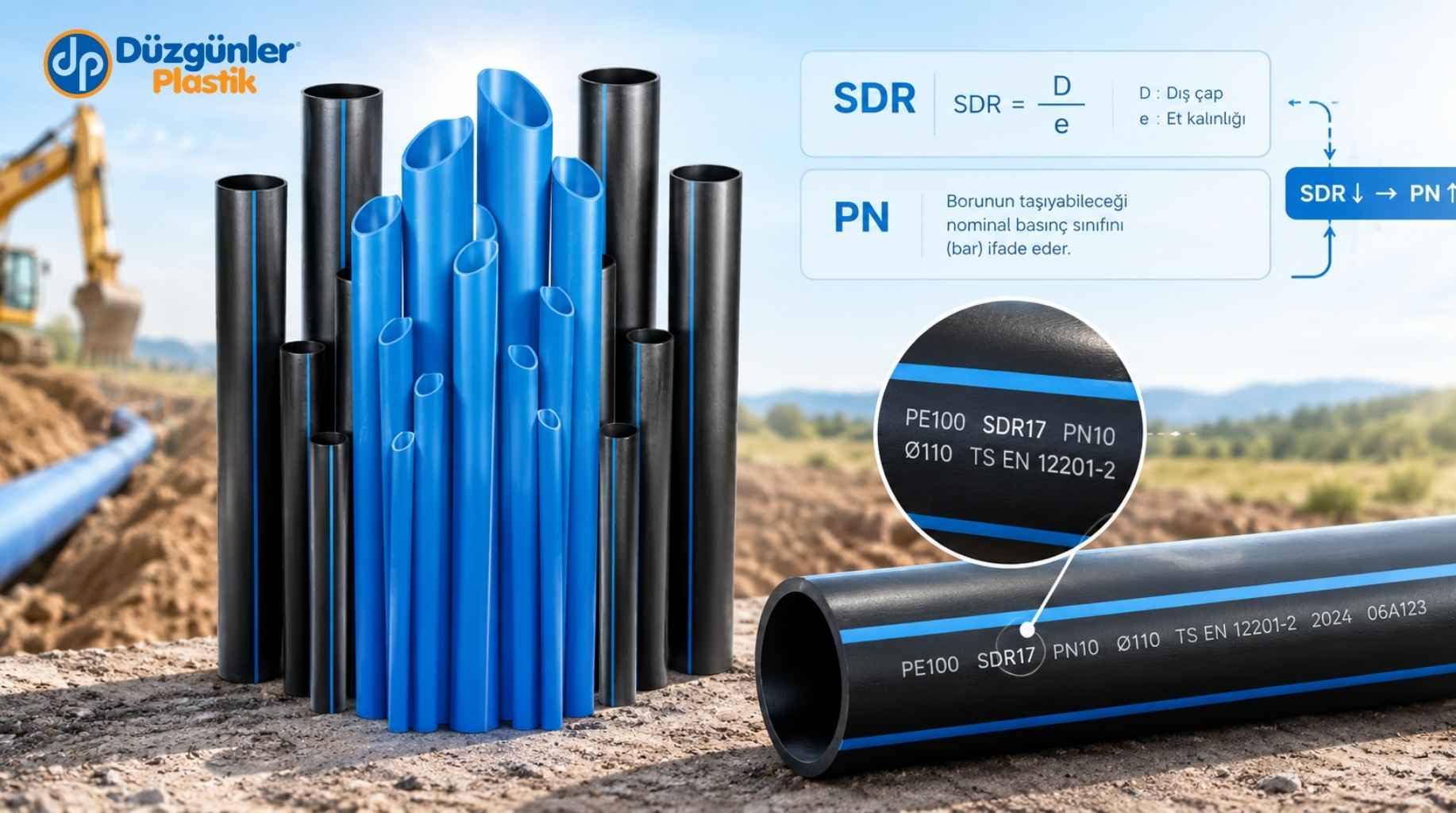
SDR (Standard Dimension Ratio) is the ratio of a pipe's outer diameter to its wall thickness (SDR = D/e), and it indicates how thick the pipe wall is. PN (Nominal Pressure) is the pressure class, in bar, that the pipe can safely carry under continuous operating conditions per the EN 12201-2 standard.
In PE100 pipes, as the SDR value decreases, wall thickness increases and the PN (pressure class) rises accordingly — SDR and PN move in opposite directions.
Reading these two values correctly is essential for choosing the right PE100 pipe for irrigation and water infrastructure projects across markets like Spain and Morocco.
What Is SDR and How Is It Calculated?
SDR is a simple ratio obtained by dividing a pipe's outer diameter (D) by its wall thickness (e): SDR = D / e.
For example, a PE100 pipe with a 110 mm outer diameter and a 10 mm wall thickness has an SDR of 11 (110/10 = 11).
The lower the SDR number, the thicker the pipe wall — meaning the pipe can withstand higher pressure.
What Is the PN Value and How Does It Relate to SDR?
PN (Nominal Pressure) expresses, in bar, the maximum pressure a PE100 pipe can safely carry under continuous operating conditions.
The PN value is calculated based on the pipe's SDR ratio and the PE100 material's MRS (Minimum Required Strength) class, following the EN 12201-2 standard.
In short: as SDR decreases, wall thickness increases, and the PN value rises accordingly.
What Are the Common SDR-PN Correspondences for PE100 Pipes?
The table below outlines commonly seen SDR-PN pairings for PE100 pipes; exact values should always be confirmed against the product label and technical documentation.
|
SDR |
Approximate PN (bar) |
Typical Use |
|---|---|---|
|
SDR11 |
PN16 |
High-pressure transmission lines |
|
SDR17 |
PN10 |
Standard drinking water / irrigation lines |
|
SDR21 |
PN8 |
Medium-pressure irrigation systems |
|
SDR26 |
PN6 |
Low-pressure feed / drainage lines |
How to Read the SDR/PN Label Printed on a Pipe
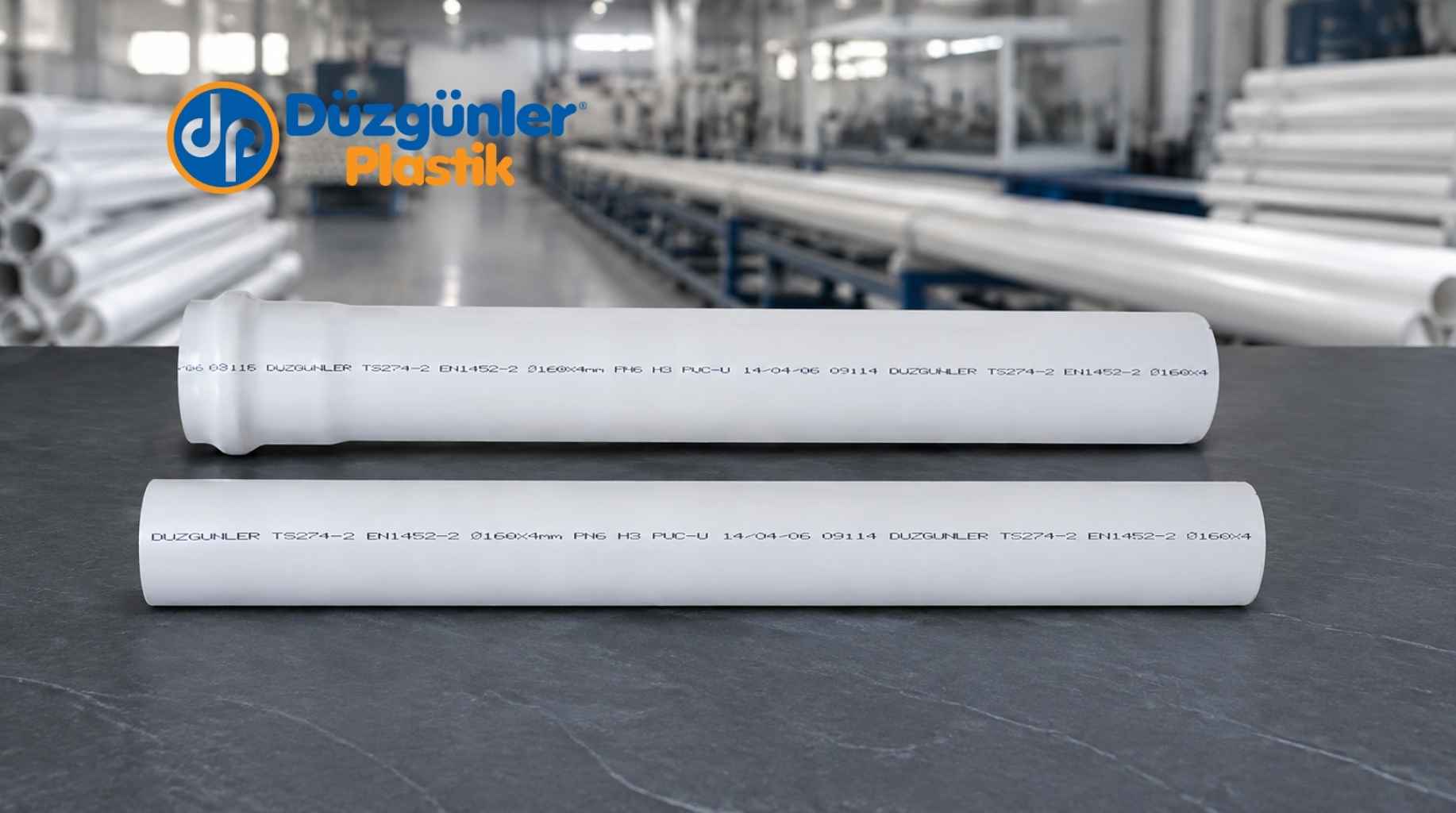
The label printed on the surface of a PE100 pipe carries all the essential technical information:
-
Material code (PE100)
-
SDR and PN value (e.g., SDR17, PN10)
-
Outer diameter (in mm, e.g., 110mm)
-
Production standard (EN 12201-2)
-
Production date and batch number
High SDR vs Low SDR: Which Should You Choose?
The table below summarizes the key differences between high-SDR and low-SDR PE100 pipes:
|
Criterion |
High SDR (Thin Wall) |
Low SDR (Thick Wall) |
|---|---|---|
|
Pressure Resistance |
Lower |
Higher |
|
Material Cost |
More economical |
Higher |
|
Best Suited For |
Low-pressure lines |
High-pressure transmission lines |
Why Check the Technical Data Sheet Before Buying a PE100 Pipe?
SDR and PN values can vary slightly between manufacturers, so it is best practice to check the product's technical data sheet (TDS) during the project planning stage.
Düzgünler Plastik manufactures HDPE PE100 pipes in line with the EN 12201-2 production standard and tests them under its ISO 9001:2015 quality management system.
Choosing the correct SDR/PN combination requires the project engineer to clearly define the line's maximum operating pressure and compare it against the value printed on the pipe label.
Why Does Choosing the Right SDR and PN Value Matter?
Selecting a PE100 pipe with a PN value lower than the system's actual operating pressure increases the risk of leaks or bursts over time — a real concern for irrigation networks across Spain and Morocco, where lines often run under variable seasonal pressure.
Choosing an unnecessarily high PN, on the other hand, adds avoidable material cost to the project.
The right SDR/PN selection is the foundation of a system that is both safe and cost-efficient.
Frequently Asked Questions
Are SDR and PN the same thing?
No. SDR expresses the pipe's wall thickness ratio, while PN expresses the pressure class the pipe can carry. SDR is one of the inputs used to calculate the PN value.
What does SDR17 printed on a pipe mean?
SDR17 means the pipe's outer diameter is 17 times its wall thickness; in PE100 pipes, this ratio typically corresponds to a PN10 pressure class.
Which SDR value should be chosen for a high-pressure line?
High-pressure transmission lines typically use a lower SDR value (such as SDR11), meaning a thicker-walled PE100 pipe.
Where is the PN value printed on the pipe?
The PN value appears on the label printed on the pipe surface, alongside the SDR value, production standard, and outer diameter.
What happens if the wrong SDR/PN is selected?
A pipe with a PN lower than the system's actual operating pressure can leak or burst over time; choosing the SDR/PN that matches the project's working pressure is critical for safety.
People Also Ask - PAA
What is PE100?
PE100 is a performance classification of high-density polyethylene (HDPE) raw material, known for high strength and long service life.
What is the difference between SDR11 and SDR17?
An SDR11 pipe has a thicker wall and higher pressure resistance (PN16) compared to an SDR17 pipe (PN10).
Where are HDPE PE100 pipes commonly used?
HDPE PE100 pipes are widely used in clean water, drinking water, and agricultural irrigation lines, including large-scale irrigation networks in Spain and Morocco.
About the Author
This content was prepared by Düzgünler Plastik's pipe engineering team, drawing on hands-on production experience.
Founded in 1975 under the leadership of Ekrem Düzgün and now managed by his sons Ziya Düzgün and Kemal Düzgün, Düzgünler Plastik manufactures HDPE PE100 pipes in accordance with the EN 12201-2 standard and the ISO 9001:2015 quality management system at its production facilities in Konya, Türkiye.
Contact our engineering team for guidance on your project.
Source: en.wikipedia.org – Polyethylene
For more information about our products and production processes, please contact us.
For more content, please visit our blog.
Similar Blogs