
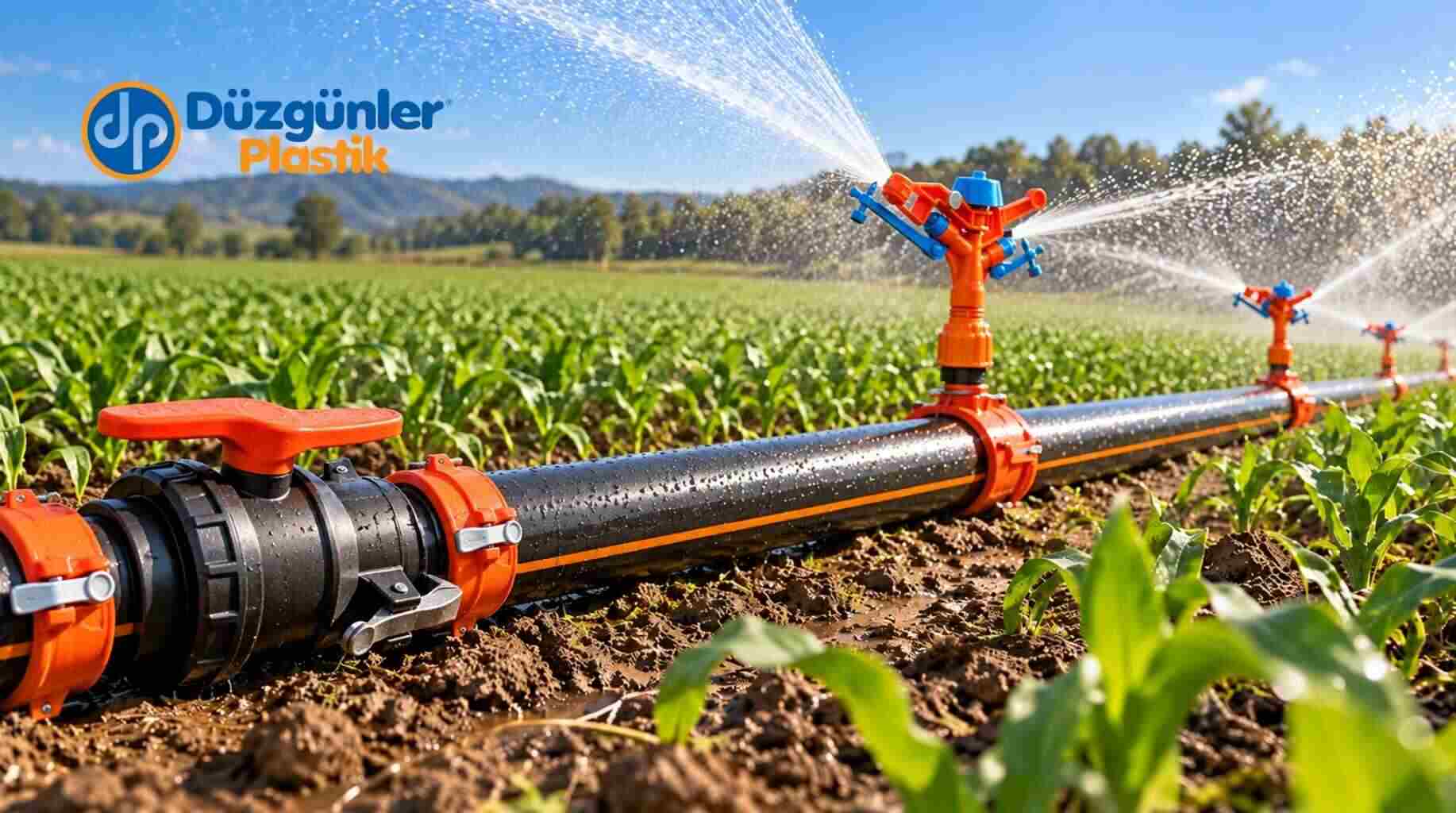
How Do You Select 5–10 atm Latched Sprinkler Pipes?
You select latched sprinkler pipes by the highest pressure the line will see. Pump pressure, field elevation and line length set that value, and the chosen pressure class should sit above it with a safety margin.
Quick Summary
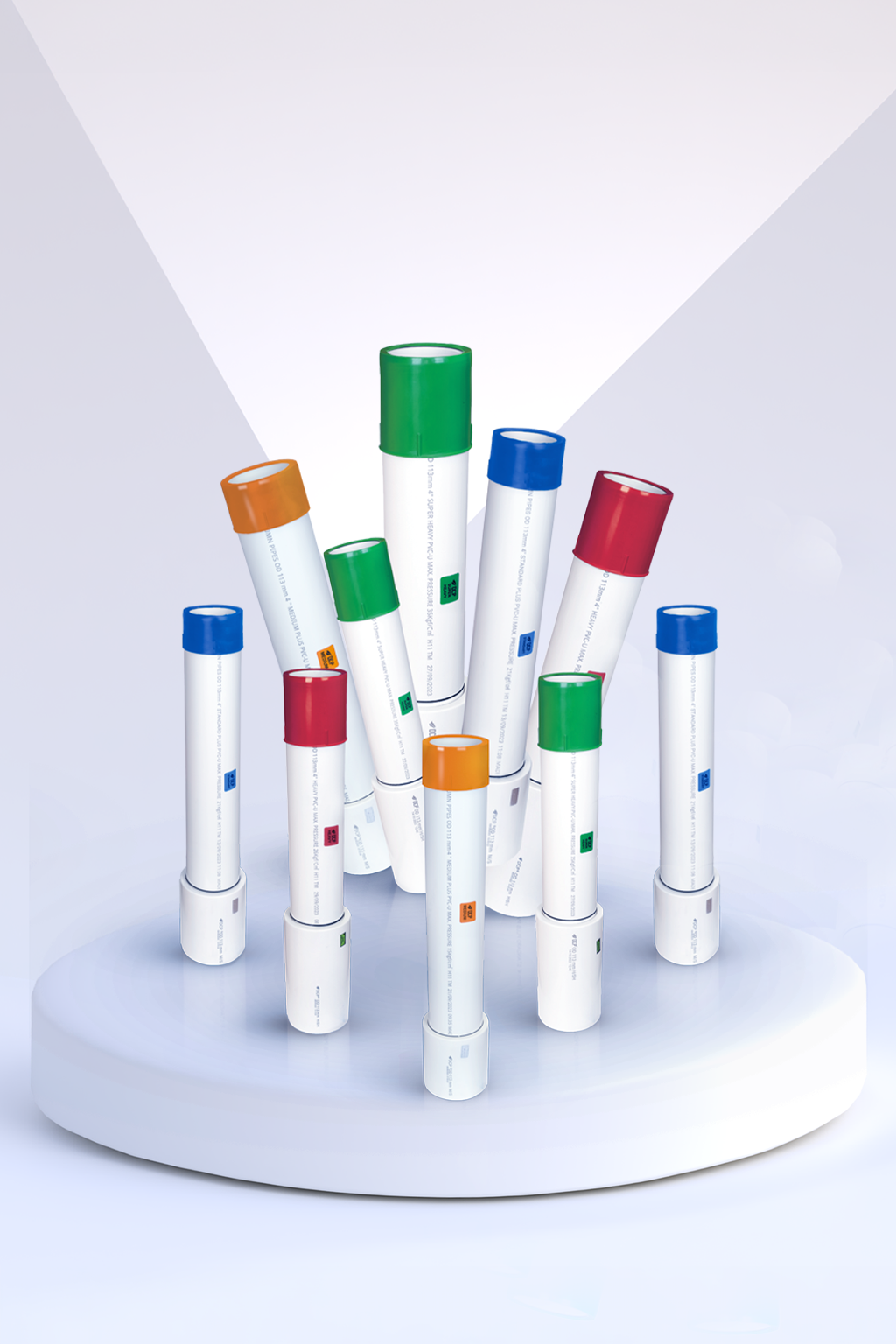
Düzgünler Plastik produces latched sprinkler pipes in 5, 6, 8 and 10 atm classes. Choosing the wrong class causes problems both ways: too low risks bursts and leaks, too high adds cost you do not need.
This guide is written for growers and buyers in Spain and Morocco looking for a reliable agricultural irrigation pipe or agricultural irrigation poly pipe. It explains what the rating means, which class fits which field and how to calculate it.
What Does the 5–10 atm Rating on an Agricultural Irrigation Pipe Mean?
“Atü” in Turkish means gauge pressure: the operating pressure above atmospheric pressure. In practice, 1 atü is taken as roughly 1 bar.
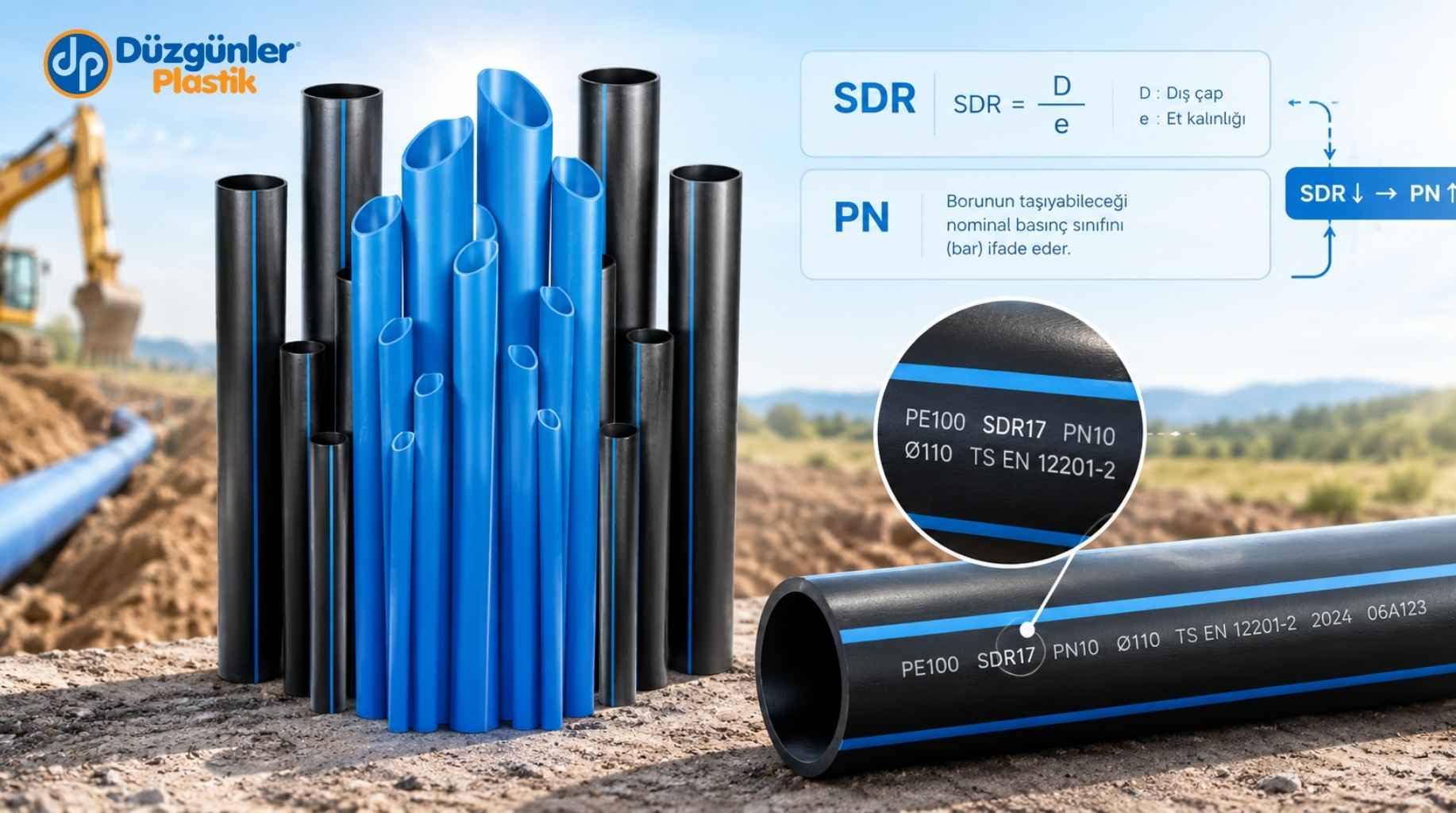
The 5, 6, 8 or 10 value is the nominal pressure class the pipe can carry continuously. For polyethylene pipe it is stated at 20°C water; as water temperature rises, the pressure the pipe can safely carry falls.
Which Class Suits Which Field?
Short answer: flat fields and short lines need a lower class; slopes and long runs need a higher one. Use this as a starting point, then confirm by calculation:
-
5 Atm Latched sprinkler pipes: Flat land, short lines, low-pressure pump or tank feed.
-
6 Atm Latched sprinkler pipes: Gentle slopes and medium-length lines.
-
8 Atm Latched sprinkler pipes: Clear slopes, long lines or direct feed from a submersible pump in a well.
-
10 Atm Latched sprinkler pipes: High-pressure pumps, large elevation differences or long main lines.
In the hilly irrigated areas of southern Spain and in Morocco’s pump-fed farms, higher classes are often the safer choice for an agriculture irrigation HDPE pipe network.
How Do You Calculate the Right Pressure Class Step by Step?
-
Check sprinkler pressure: Note the operating pressure stated by the sprinkler manufacturer.
-
Add friction loss: Longer lines and smaller diameters lose more pressure.
-
Add elevation: Every 10 metres of height difference adds roughly 1 atm.
-
Check the pump’s maximum: With valves closed, the pump’s top pressure may be the highest the line sees.
-
Leave a safety margin: Pick the class that leaves headroom, not the first one above your figure.
|
Hypothetical Example Sprinkler pressure 3 atm, friction loss 1 atm and 20 metres of elevation (about 2 atm) give an operating pressure of about 6 atm. A 6 atm pipe would be at its limit, so 8 atm latched sprinkler pipes are the better choice. The figures only illustrate the method. |
Why Can Water Hammer Require a Higher Class?
When a valve closes suddenly or a pump stops, a pressure wave travels through the line. This is called water hammer, and the peak can exceed normal operating pressure.
Close valves slowly and protect the pump outlet. Without protection, one class higher is the safer agricultural irrigation poly pipe choice.
Low Class or High Class? A Comparison
|
Criterion |
5–6 atm |
8–10 atm |
|
Suitable field |
Flat, short lines |
Sloped, long lines |
|
Feed |
Tank or low-pressure pump |
Submersible, high-pressure pump |
|
Water hammer tolerance |
Lower |
Higher |
|
Weight and cost |
Lighter, more economical |
Thicker wall, higher cost |
What Are the Pros and Cons?
5–6 atm
-
Pro: Light, easy to move and more economical.
-
Con: Less margin against pressure surges.
8–10 atm
-
Pro: Safe on sloped and long lines.
-
Con: Unnecessary cost on flat, short lines.
Latched Sprinkler Pipes or Drip Irrigation Pipe?
Latched sprinkler pipes spray water over the crop; a drip irrigation pipe delivers it at the root zone through emitters, as in drip irrigation. They are different systems with different drip irrigation pipe fittings, so match the pipe to your irrigation method.
What Are the Features of Düzgünler Plastik Latched Sprinkler Pipes?
-
Material: High-density polyethylene (HDPE).
-
Standard: The company states production in line with TS EN 12201-3, part of the European EN 12201 series familiar to buyers in Spain.
-
Connection: Latch lock fittings for quick assembly and leak-proof joints.
-
Durability: UV-resistant structure.
-
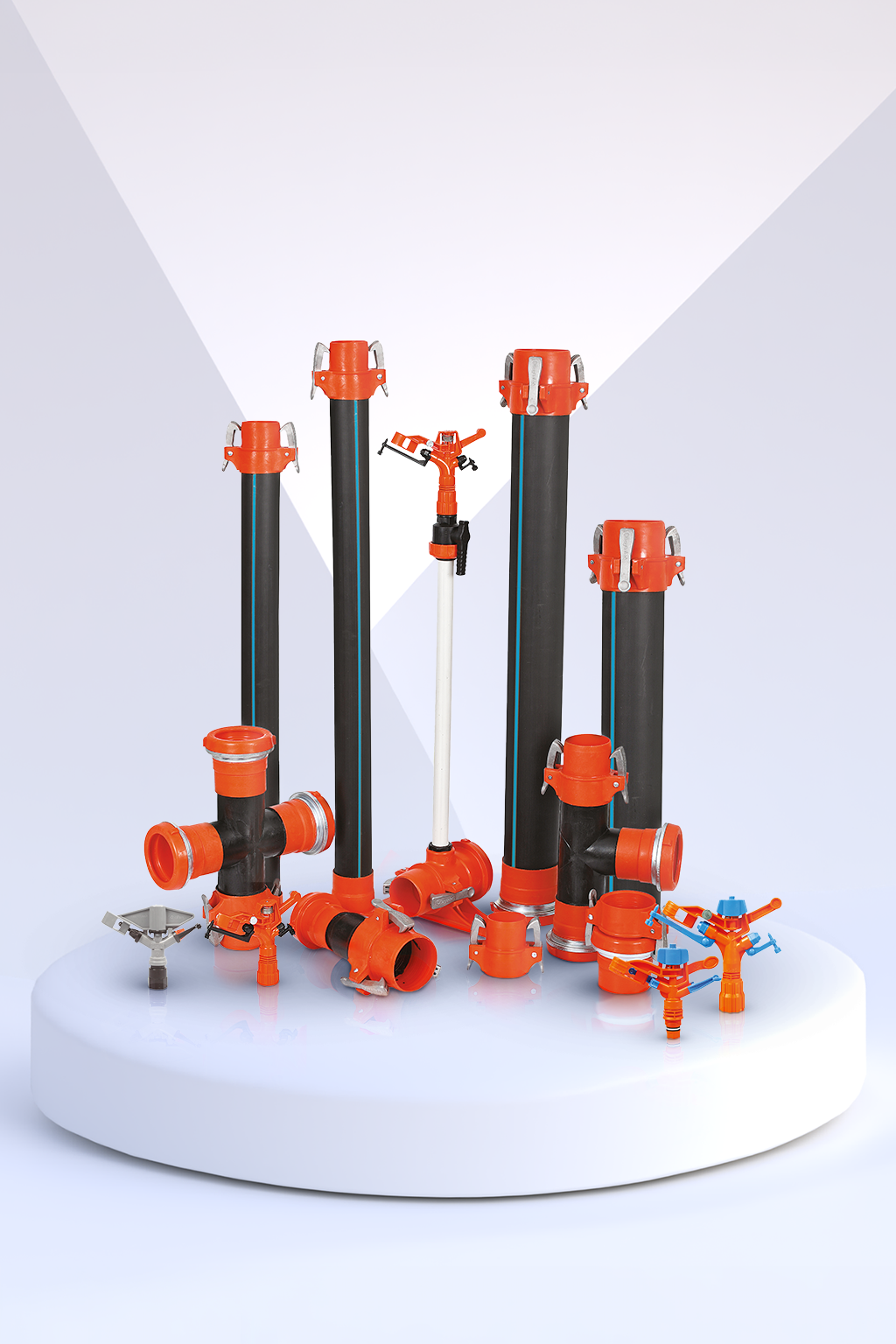
Fittings: Latch couplings, bends and end caps serve as matching agricultural irrigation pipe fittings.
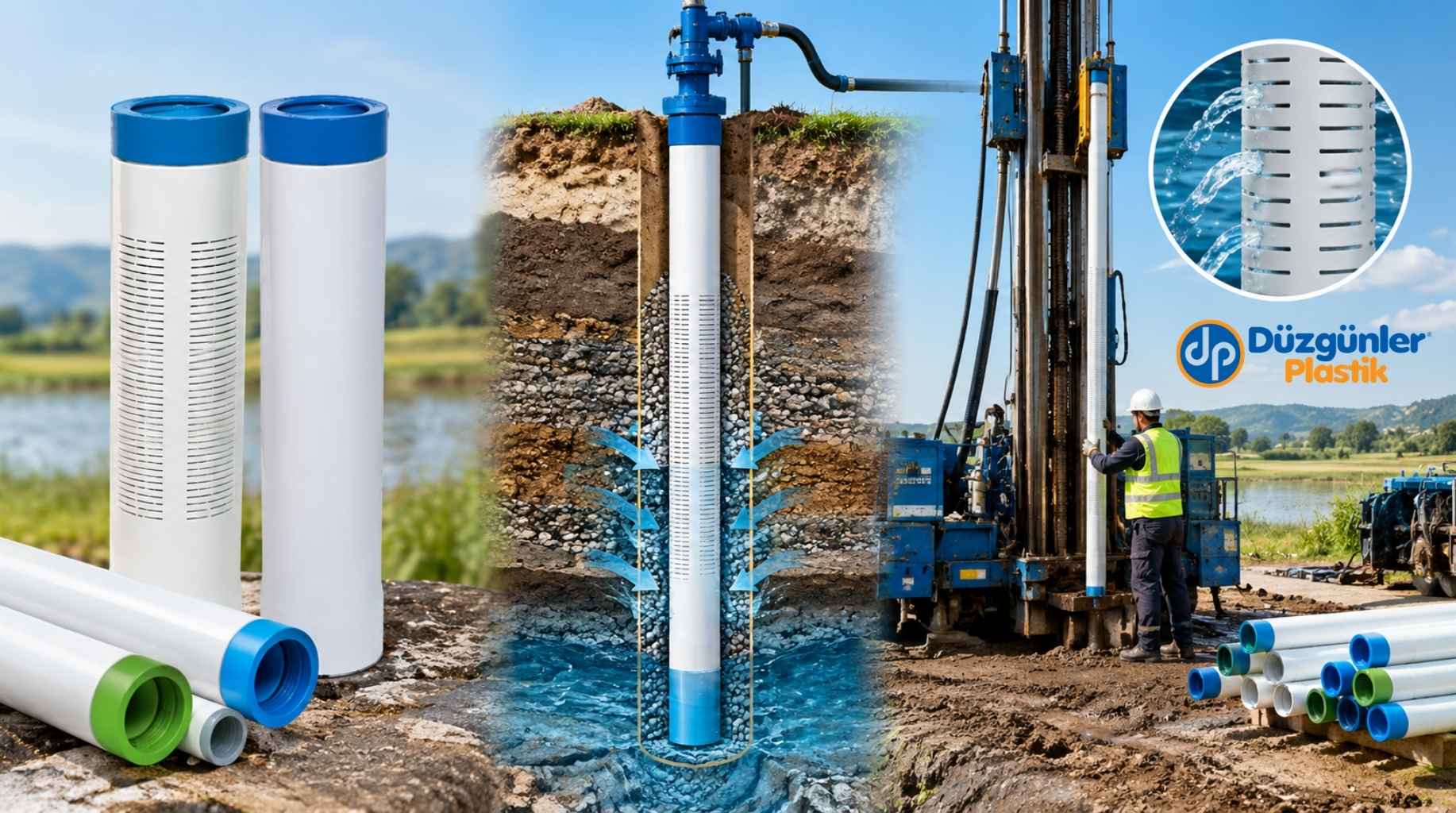
Düzgünler Plastik was the first company in Türkiye to produce plastic column pipes for submersible pumps, and supplies products for the full chain from well to field.
Frequently Asked Questions
What pressure class should latched sprinkler pipes be?
Choose by the highest pressure in the line. Flat, short lines usually suit 5–6 atm; sloped, long lines usually suit 8–10 atm.
Is 1 atm the same as 1 bar?
In practice, 1 atü is taken as roughly 1 bar.
Which class suits a line fed directly by a submersible pump?
Check the pump’s pressure with valves closed. This usually calls for an 8 or 10 atm class.
Where can I find agricultural irrigation pipe for sale for Spain or Morocco?
Send your pump data, line length and elevation to the Düzgünler Plastik team to request availability and a quotation for Spain or Morocco.
Does heat affect pipe pressure?
Yes. In polyethylene pipe, the safe pressure falls as water temperature rises. In hot regions, increase your safety margin.
People Also Ask - PAA
Why do sprinkler pipes burst?
The most common causes are the wrong pressure class, water hammer and ignoring elevation.
Are HDPE pipes good for agricultural irrigation?
Yes. HDPE is flexible, corrosion-free and widely used as agricultural irrigation pipe.
Should I buy used sprinkler pipes?
Only if the pressure class and latch condition can be verified. New pipe comes with clear class and standard information.
Let’s Define the Right Pressure Class for Your Field
Whether your farm is in Spain or Morocco, share your pump data, line length and elevation, and we will recommend the right latched sprinkler pipes class and agricultural irrigation pipe fittings.
|
Author: Düzgünler Plastik Technical Team Founded in 1975 by Ekrem Düzgün in agricultural machinery, Düzgünler Plastik now produces plastic pipes in Konya under Ziya Düzgün and Kemal Düzgün, with production machinery designed by its in-house R&D team. |
For more information about our products and production processes, please contact us.
For more content, please visit our blog.
Similar Blogs